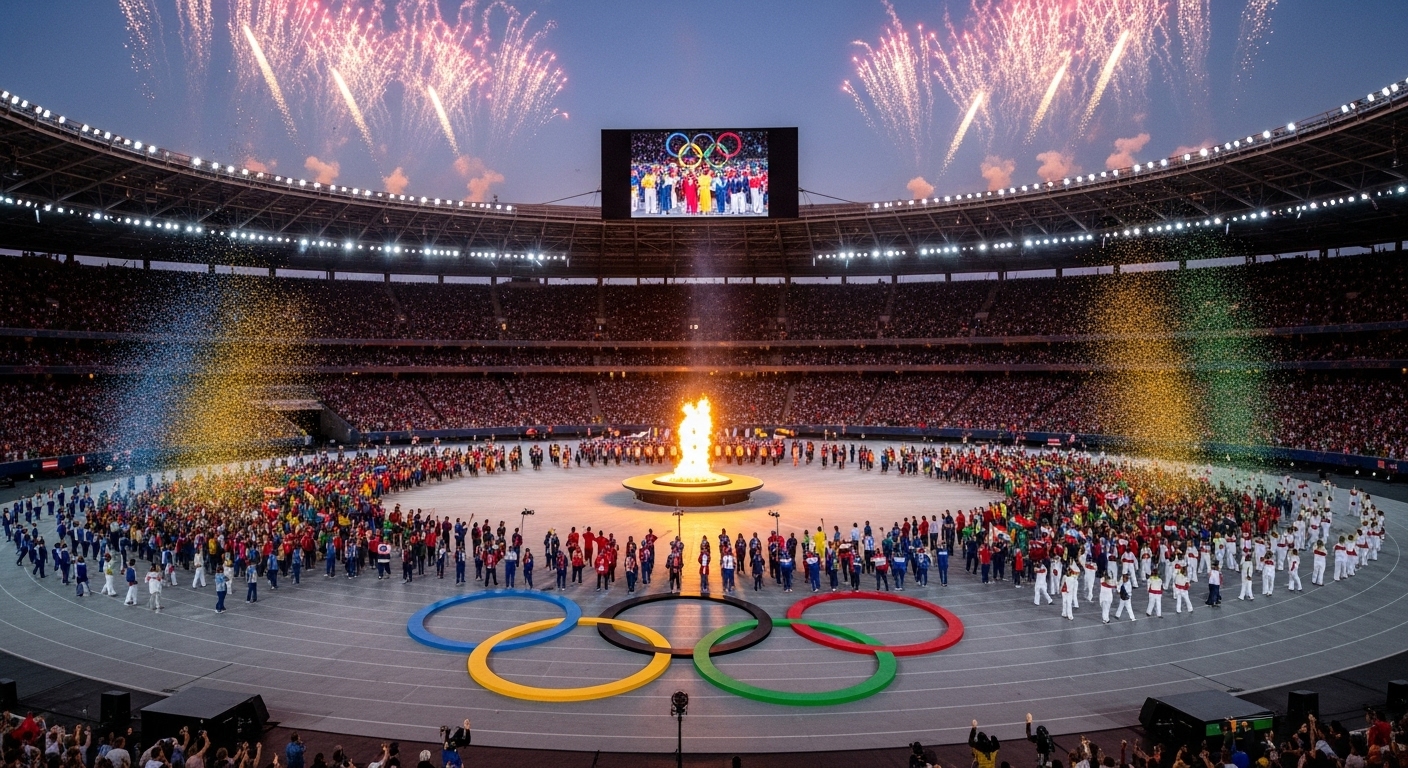
The Olympic Games have always been more than just a sporting spectacle. They embody ideals of excellence, unity, and human achievement, bringing together athletes from every corner of the globe to compete on the grandest stage. From the revival of the modern Olympics in Athens in 1896 to the global phenomenon the Games have become today, the movement has stood as a celebration of humanity’s shared spirit. Yet beneath the medals, the ceremonies, and the unforgettable performances lies another story: the story of sponsorship. The Olympics as we know them today are shaped not only by the athletes and the host cities but also by the companies and brands that fund, promote, and align themselves with the Games. Sponsorship has not simply been a financial lifeline—it has redefined the scale, reach, and very identity of the Olympics. To understand the modern Games, one must also understand how sponsorship changed them.
In the early decades of the modern Olympics, sponsorship was practically non-existent. The Games were fueled largely by the vision of Pierre de Coubertin, the founder of the modern Olympic movement, and the support of national governments or local organizers. Financial struggles were frequent, and some early editions, such as the 1900 Paris Games and the 1904 St. Louis Games, were overshadowed by world fairs and lacked cohesion. Without commercial backing, the Olympics remained modest affairs with limited infrastructure and global attention. Athletes were amateurs in the truest sense, competing more for honor than livelihood. Yet as the twentieth century advanced, the Games grew in scale, and so did the costs. Larger stadiums, improved facilities, and increasingly global audiences demanded resources far beyond what ticket sales and government subsidies could provide. This was where sponsorship began to enter the picture, quietly at first but eventually with transformative impact.
By the mid-20th century, companies recognized that associating with the Olympics meant associating with values of excellence, fairness, and global unity. Brands like Coca-Cola were among the first to seize this opportunity. Coca-Cola’s involvement dates back to the 1928 Amsterdam Games, making it the longest continuous Olympic sponsor. The company’s strategy was simple but groundbreaking: by linking itself to the Olympics, Coca-Cola gained not only international visibility but also credibility rooted in the Games’ positive image. That early move laid the foundation for a model that would expand exponentially over the decades.
The 1960 Rome Olympics marked another turning point, as television broadcasting became a major force. With the ability to reach millions of households around the world, the Games transformed from a live event for those in attendance into a truly global spectacle. Television rights brought in significant revenue, but they also made the Olympics far more attractive to sponsors. Companies realized that their logos, products, and advertisements could be seen by a worldwide audience during one of the most prestigious events on Earth. This exposure was unparalleled, and the commercial dimension of the Games began to grow rapidly.
The true revolution, however, came in the 1980s under the leadership of International Olympic Committee president Juan Antonio Samaranch. When Samaranch took office in 1980, the Olympic movement was struggling. The Montreal Games of 1976 had left the host city with enormous debt, the Moscow Games of 1980 were overshadowed by a major boycott, and the future of the Olympics looked uncertain. Samaranch understood that for the Olympics to survive and thrive, they needed a reliable, global financial foundation. His solution was the creation of The Olympic Partners (TOP) program, launched in 1985. This was not merely about allowing companies to advertise at the Games—it was about creating a structured, elite sponsorship system.
The TOP program selected a handful of multinational corporations and granted them exclusive global marketing rights across all Olympic Games for a four-year cycle. These sponsors paid significant sums for the privilege, and in return, they were able to use the Olympic rings, align their brand with the values of the movement, and enjoy exposure to billions of viewers worldwide. The model proved immensely successful. It not only stabilized the IOC’s finances but also provided host cities and organizing committees with critical resources. With TOP sponsorships, the Olympics gained the financial muscle to expand, innovate, and modernize.
The influence of sponsorship was evident in the 1984 Los Angeles Games, even before the TOP program officially began. Unlike previous hosts, Los Angeles organizers relied heavily on corporate sponsorship and private funding rather than government support. This approach turned a potential financial risk into one of the most profitable Games in history. Companies like McDonald’s and Coca-Cola became deeply embedded in the Olympic experience, and the Games demonstrated that the partnership between sport and business could be mutually beneficial on an unprecedented scale. The Los Angeles model became a blueprint for future Olympics, showing that commercial involvement could sustain and even enhance the Games.
From that point onward, sponsorship became an inseparable part of the Olympic landscape. Every edition of the Games since has seen multinational giants align themselves with the event. Technology companies provided innovations for timing and broadcasting, sportswear brands supplied uniforms and gear, and consumer goods companies used the Olympics as a platform to promote their products. The logos, the ads, the carefully crafted campaigns—all became as familiar a sight as the athletes themselves. For sponsors, the benefits extended beyond visibility. Associating with the Olympics allowed them to link their brands with powerful emotions: the thrill of victory, the inspiration of human achievement, the unity of nations. Consumers came to see these brands not just as companies selling products but as part of the Olympic story itself.
Sponsorship also transformed the experience of the Games for athletes and fans. For athletes, corporate backing often meant financial support, training resources, and opportunities to turn Olympic success into lasting careers. In earlier decades, many Olympians struggled financially, often retiring after the Games with little to show for their efforts. Sponsorship allowed athletes to secure endorsements, build personal brands, and dedicate themselves fully to training without financial hardship. Fans, meanwhile, enjoyed expanded coverage, improved facilities, and a more immersive experience. From interactive apps to global advertising campaigns, sponsors have helped bring the Games closer to audiences worldwide, making them not just a two-week event but a year-round global conversation.
Yet the rise of sponsorship has not been without controversy. Critics argue that the commercialization of the Olympics has strayed from the movement’s original ideals of amateurism and pure sport. The dominance of large corporations, with their logos plastered across venues and broadcasts, has at times overshadowed the athletic achievements themselves. Questions have also arisen about the ethical implications of certain sponsors, particularly when companies with questionable labor or environmental records seek to align themselves with the Olympics’ positive image. For some, the heavy presence of sponsors represents a tension between the spirit of the Games and the realities of modern business.
Moreover, sponsorship has influenced not only the visibility of the Games but also their structure and location. The enormous costs of hosting an Olympics are offset in part by sponsorship revenue, but the reliance on corporate funding has also raised concerns about the sustainability of the model. Smaller or less wealthy nations often struggle to compete for hosting rights, as the Games demand immense infrastructure investments that can only be justified with strong commercial backing. Sponsorship, therefore, has played a role in shaping who gets to host the Olympics and how they are staged.
At the same time, the positive impact of sponsorship cannot be dismissed. Without corporate funding, the Olympics would likely not have achieved their current scale or survived moments of crisis. The financial stability provided by sponsors has allowed the IOC to fund youth sports programs, support athletes from developing nations, and invest in global initiatives such as sustainability and inclusion. Sponsorship has also enabled technological advancements in broadcasting, allowing fans around the world to enjoy high-definition, real-time coverage and digital access unimaginable in the early decades.
The digital age has brought new dimensions to Olympic sponsorship. Companies no longer rely solely on television commercials or in-stadium signage. They now engage fans across social media platforms, creating interactive campaigns, hashtags, and virtual experiences that extend far beyond the Games themselves. Sponsorship today is as much about storytelling as it is about advertising. Brands craft narratives around athletes, highlight journeys of resilience, and tap into the emotional core of the Olympic experience. The result is a symbiotic relationship: athletes and the Games gain visibility and funding, while brands gain authenticity and emotional resonance with global audiences.
Looking ahead, sponsorship will continue to shape the Olympics in profound ways. With the rise of streaming services, digital content, and new technologies like virtual and augmented reality, the possibilities for engagement are endless. Sponsors will likely play key roles in introducing innovations that enhance how fans experience the Games. At the same time, increasing scrutiny of corporate responsibility means that only brands aligned with sustainability, inclusivity, and ethical values will be welcomed into the Olympic family. The days when any company could buy a spot are fading; now, sponsorship must reflect the values of the modern world.
The story of how sponsorship changed the Olympics is ultimately a story of evolution. What began as a small-scale celebration of sport has become the largest sporting event on Earth, watched by billions and sustained by global partnerships. Sponsorship has turned the Olympics into a financial powerhouse, ensured its survival during difficult times, and expanded its reach to every continent. It has also raised questions about balance—between commerce and idealism, between global brands and grassroots sport, between spectacle and authenticity.
But perhaps the true significance of sponsorship lies in how it has allowed the Olympics to remain relevant in a changing world. By embracing corporate partnerships, the Games have been able to adapt, innovate, and inspire new generations. While challenges remain, the relationship between sponsorship and the Olympics has proven enduring, resilient, and transformative. As long as the Games continue to balance their ideals with their commercial realities, sponsorship will remain not just a financial mechanism but a central force in shaping what the Olympics mean for athletes, fans, and nations around the globe.