
Introduction: The Universal Language of Sports
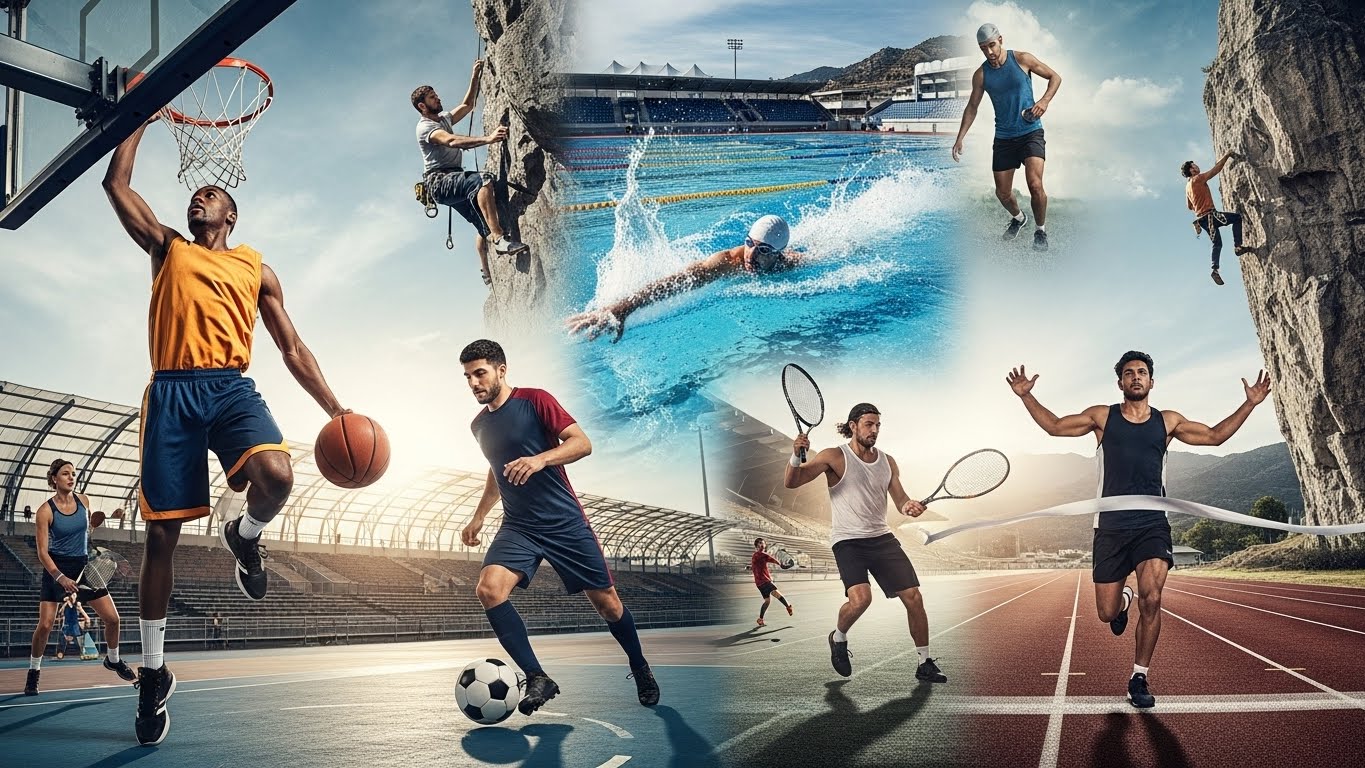
Across every culture and continent, sports have served as a universal language of human expression. Long before modern stadiums, cameras, and scoreboards, ancient civilizations used physical contests to celebrate strength, skill, and community. From the Olympic games of ancient Greece to the bustling football grounds of modern Europe, from cricket fields in India to basketball courts in the United States, sports have unified people of diverse backgrounds under a single, thrilling rhythm — the rhythm of competition.
Sports are not merely games; they are reflections of humanity’s deepest instincts — to compete, to collaborate, to test limits, and to celebrate triumph over adversity. Whether played for glory, leisure, or health, they remain a living, breathing testament to what it means to be human.
The Origins of Sports: From Survival to Celebration
The story of sports begins long before recorded history. Early humans engaged in physical activities not for entertainment but for survival. Hunting, running, throwing, and fighting were essential for daily existence. Over time, as societies evolved and life became more structured, these activities transformed into organized competitions.
In ancient Egypt, wrestling and archery were prominent, often practiced by soldiers and celebrated in festivals. The Greeks formalized athletic contests with the birth of the Olympic Games in 776 BCE, where running, discus throwing, and chariot racing became spectacles of honor. For the Greeks, physical fitness was a sacred ideal — a harmony of body and mind — and athletes were celebrated as heroes.
In China, sports like cuju, an early form of soccer, were played as far back as 200 BCE. Meanwhile, Mesoamerican civilizations like the Mayans and Aztecs created ritualistic ball games that carried spiritual and political significance. Across continents, the human desire to measure strength, skill, and endurance against others blossomed into cultural traditions that still echo today.
The Rise of Modern Sports
The modern era of sports began to take shape during the 19th century, particularly in Europe and North America. As industrialization spread, so did leisure time. Cities grew, schools and universities began promoting organized athletics, and rules were standardized. The foundation of modern sports such as football, cricket, baseball, and rugby was laid during this period.
The late 19th and early 20th centuries witnessed the formalization of sports institutions and global competitions. The revival of the Olympic Games in 1896 symbolized the rebirth of international athletic unity. Soon, governing bodies like FIFA for football and the International Cricket Council for cricket began shaping global competitions.
Transportation and communication advancements made it easier for nations to compete. Sports moved from local playgrounds to international arenas. What began as physical contests among individuals transformed into cultural phenomena that represented entire nations.
Sports and National Identity
Few forces have the power to unite a nation like sports. When a team steps onto the field, they carry not just their skill but the pride, history, and dreams of their people. A single match can ignite collective joy or heartbreak.
During the 20th century, sports became intertwined with politics and identity. The “Miracle on Ice” during the 1980 Winter Olympics, when the United States defeated the Soviet Union in ice hockey, symbolized more than a game — it represented ideological triumph during the Cold War. Similarly, cricket matches between India and Pakistan have long been imbued with political undertones, transcending the boundaries of mere sport.
For developing nations, sports often serve as a platform to showcase potential and resilience. The victories of African athletes in track and field, the rise of Asian football teams, or the dominance of Caribbean sprinters have all challenged stereotypes and inspired generations.
When South Africa won the Rugby World Cup in 1995 under Nelson Mandela’s presidency, it marked a defining moment in post-apartheid unity. Sports became a bridge — a stage for reconciliation, pride, and progress.
The Science of Sports: Human Physiology and Performance
Behind every athlete’s success lies an intricate balance of biology, physics, and psychology. The human body, through centuries of evolution, has developed the perfect machinery for motion and endurance.
Modern sports science explores how training, nutrition, recovery, and technology can optimize performance. High-performance athletes undergo biomechanical analysis to perfect their techniques. Nutritionists design personalized diets to enhance energy and muscle recovery. Psychologists help athletes overcome pressure and maintain focus.
The introduction of wearable technology has revolutionized training. Sensors now monitor heart rate, muscle strain, and oxygen levels in real time, offering data-driven insights that were once unimaginable. From hydration tracking to sleep optimization, every aspect of performance can be measured and improved.
Yet, despite technological advances, the essence of sports performance remains deeply human. It is about grit, willpower, and the courage to push beyond physical and mental boundaries. The mind often proves to be the most powerful muscle of all.
The Psychology of Competition
Sports are as much a mental game as a physical one. The difference between victory and defeat often lies in the athlete’s mindset. Mental toughness, focus, and emotional control define champions.
Psychologists have long studied what drives athletes to succeed under immense pressure. Theories like “flow state” — a mental condition of complete immersion — explain how athletes perform seemingly impossible feats. When a sprinter explodes off the blocks or a basketball player sinks a perfect shot in the final seconds, it often happens in a state of pure focus where thought and action merge seamlessly.
However, the same intensity that fuels greatness can also breed burnout, anxiety, and depression. The pressure to perform, the scrutiny of fans and media, and the weight of expectations can overwhelm even the strongest athletes. Recent years have seen a growing acknowledgment of mental health in sports, with stars openly discussing their struggles. This transparency has reshaped how the world views success and well-being in competitive environments.
The Economic Power of Sports
Sports today are a global industry worth trillions. From broadcasting rights and sponsorships to merchandise and tourism, the financial ecosystem surrounding sports is vast. Major events like the FIFA World Cup or the Olympic Games generate billions in revenue, create jobs, and transform host cities.
Clubs and franchises have evolved into powerful brands. Athletes are not only competitors but also global influencers. Endorsements and sponsorship deals can elevate a player’s earnings far beyond their salaries. The digital age has expanded the marketplace further — social media, streaming platforms, and virtual experiences have turned fans into active participants rather than passive viewers.
Yet, the commercialization of sports also raises ethical questions. Issues such as athlete exploitation, corruption, and the prioritization of profit over fairness have sparked debate. Balancing commercial success with integrity remains one of the defining challenges of modern sports.
Sports and Technology: The New Frontier
Technology has transformed how sports are played, watched, and experienced. Video assistant referees, goal-line technology, and instant replays have increased accuracy and fairness. Data analytics help teams design strategies and predict opponents’ moves.
Fans too have been drawn deeper into the experience. High-definition broadcasts, augmented reality, and virtual stadium tours have turned sports into immersive entertainment. Esports — competitive gaming — has emerged as a new frontier, blurring the line between physical and digital competition.
Meanwhile, sports medicine continues to break barriers in recovery and injury prevention. Innovations like cryotherapy, stem cell treatment, and neuro-monitoring are extending careers and improving safety. As technology continues to evolve, the boundaries of human performance are being redefined.
The Cultural Influence of Sports
Sports shape not only bodies but also societies. They influence fashion, language, and lifestyle. The jerseys worn by athletes become symbols of pride; the slogans and chants of fans become cultural expressions.
From the street games of Rio de Janeiro to the frozen ponds of Canada, sports reflect cultural diversity. They offer shared rituals — the anthem before kickoff, the handshake after a match, the tears of victory or loss. These moments transcend language and geography, reminding us of our shared humanity.
Pop culture, too, has embraced sports as inspiration. Films, songs, and literature celebrate athletes as modern-day heroes. Stories of perseverance and triumph — from boxing rings to marathon tracks — capture universal emotions of struggle and redemption.
Women in Sports: Breaking Barriers
For centuries, women were excluded from many athletic arenas. However, the past century has seen a revolution in female participation and recognition. From Billie Jean King’s fight for equality in tennis to Serena Williams redefining dominance, women athletes have shattered records and stereotypes alike.
The inclusion of women’s events in global competitions like the Olympics has furthered equality. The Women’s World Cup, WNBA, and other leagues have built passionate fan bases and inspired younger generations.
Yet, challenges remain. Disparities in pay, media coverage, and sponsorship persist across many sports. But as more voices demand equity and representation, the landscape continues to shift. Women’s achievements in sports are not just victories for gender equality — they are triumphs for humanity’s collective progress.
Youth and Grassroots Sports
While professional athletes capture headlines, the true heart of sports beats in schools, playgrounds, and local clubs. Grassroots sports nurture discipline, teamwork, and confidence among young people. They teach lessons that extend beyond the field — perseverance, leadership, and respect.
Physical activity also plays a vital role in combating health issues such as obesity, depression, and social isolation. Sports give children a sense of purpose and belonging. They build friendships, break social barriers, and create future role models.
Many global stars began their journey in modest surroundings — a dusty field, a neighborhood court, or a rural track. Their stories remind us that greatness often begins with passion and opportunity rather than privilege. Investing in youth and community sports ensures that this spirit continues to thrive.
The Dark Side of Sports
As with any human endeavor, sports are not immune to flaws. Issues like doping, corruption, match-fixing, and violence have tarnished reputations and eroded trust. The pursuit of victory at any cost has sometimes led athletes to take dangerous substances or engage in unethical behavior.
The commercialization of sports has also led to exploitation — of athletes, fans, and even local communities. The pressure to win and profit can overshadow the values of fairness, respect, and integrity that sports were built upon.
Addressing these issues requires transparency, accountability, and education. Anti-doping initiatives, stricter governance, and ethical leadership can help restore faith. The true spirit of sports lies not just in winning but in how the game is played.
The Future of Sports: Innovation and Inclusion
Looking ahead, the future of sports is being shaped by innovation and inclusion. Technology will continue to transform how athletes train and how fans engage. Artificial intelligence may soon predict injuries before they happen. Virtual reality could allow fans to experience games from the player’s perspective.
Inclusivity will also define the next chapter. Adaptive sports for athletes with disabilities are gaining global recognition, challenging outdated notions of ability. Initiatives promoting gender equality, diversity, and accessibility are ensuring that sports truly belong to everyone.
Environmental sustainability is another growing focus. Major organizations are taking steps to reduce carbon footprints through green stadiums, eco-friendly gear, and responsible event management.
Sports will continue to evolve, but their essence will remain unchanged — a celebration of human potential and unity.
Conclusion: Why Sports Matter
At their core, sports are more than competition. They are stories of courage, teamwork, and transformation. They bring people together in moments of shared emotion — joy, heartbreak, pride, and hope.
From a child kicking a ball in a village to a world-class athlete standing on the podium, the spirit is the same: the pursuit of excellence, the thrill of effort, and the beauty of movement. Sports teach us resilience in defeat and humility in victory. They remind us that no matter our differences, we are all part of one global team — humanity itself.
In a world often divided by politics, race, or ideology, sports remain one of the few arenas where unity still feels natural. Every cheer, every race, every game is a reminder of what we can achieve when we play not just for ourselves, but for one another.
Sports will continue to evolve, inspire, and unite generations to come — proving that while records may fall, the human spirit never stops rising.